Harvinno Digital logoContact Us

Optimization Second.

Optimization Second is where stable operations are converted into measurable business performance. Harvinno applies a layered APC strategy to regulate mass and energy balance, optimize grade and recovery, and improve throughput with decisions grounded in data rather than operator guesswork.

APC strategic approach and three control layers

APC Strategic Approach

Start With The Full Three-Layer Strategy.

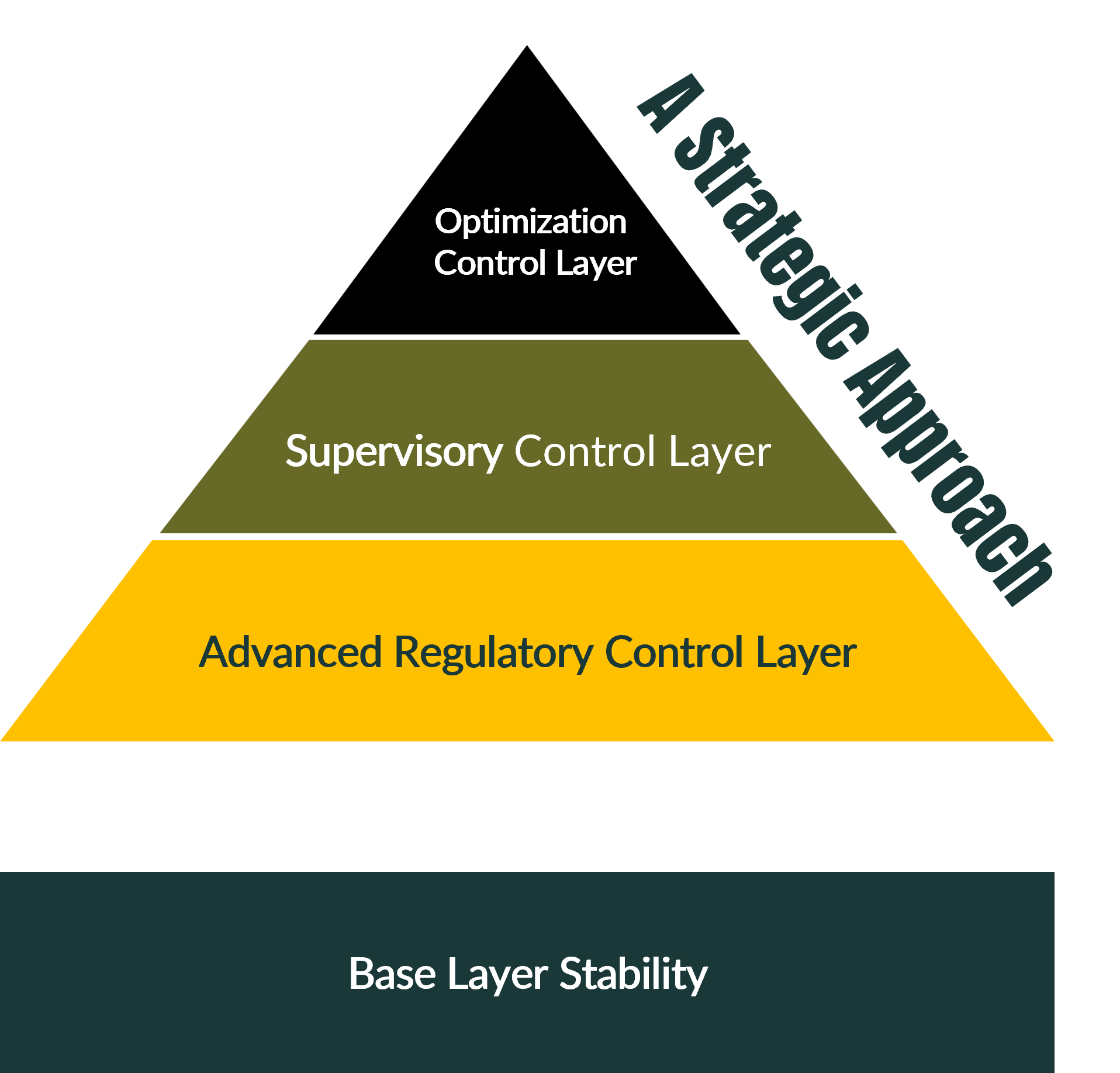
Once you have base-layer stability, you have a reliable foundation to optimize from. Harvinno sequences APC across three linked layers so each step strengthens the next: regulatory control restores predictability, supervisory control balances mass and energy, and value-focused optimization then delivers measurable gains without destabilising the process.

  • Advanced Regulatory Control: optimize and stabilize base layer behavior.
  • Supervisory Control Layer (Mass Pull): regulate mass and energy balance.
  • Optimization Control Layer (Grade): optimize grade, recovery, and throughput.

Layer 1: Advanced Regulatory Control

Stabilize First So Optimization Can Hold.

PID and single-loop control are effective for stabilising individual loops, but many industrial performance problems are multivariable and cannot be solved by tuning one loop at a time. Advanced regulatory control addresses those cross-coupled constraints: interacting variables, feed disturbances, equipment limitations, and operating points that push the process outside a stable window.

By restoring confidence in automation and reducing manual intervention, this base layer gives the plant a dependable operating platform. Without this stability, supervisory and optimization logic will chase noise rather than deliver repeatable value.

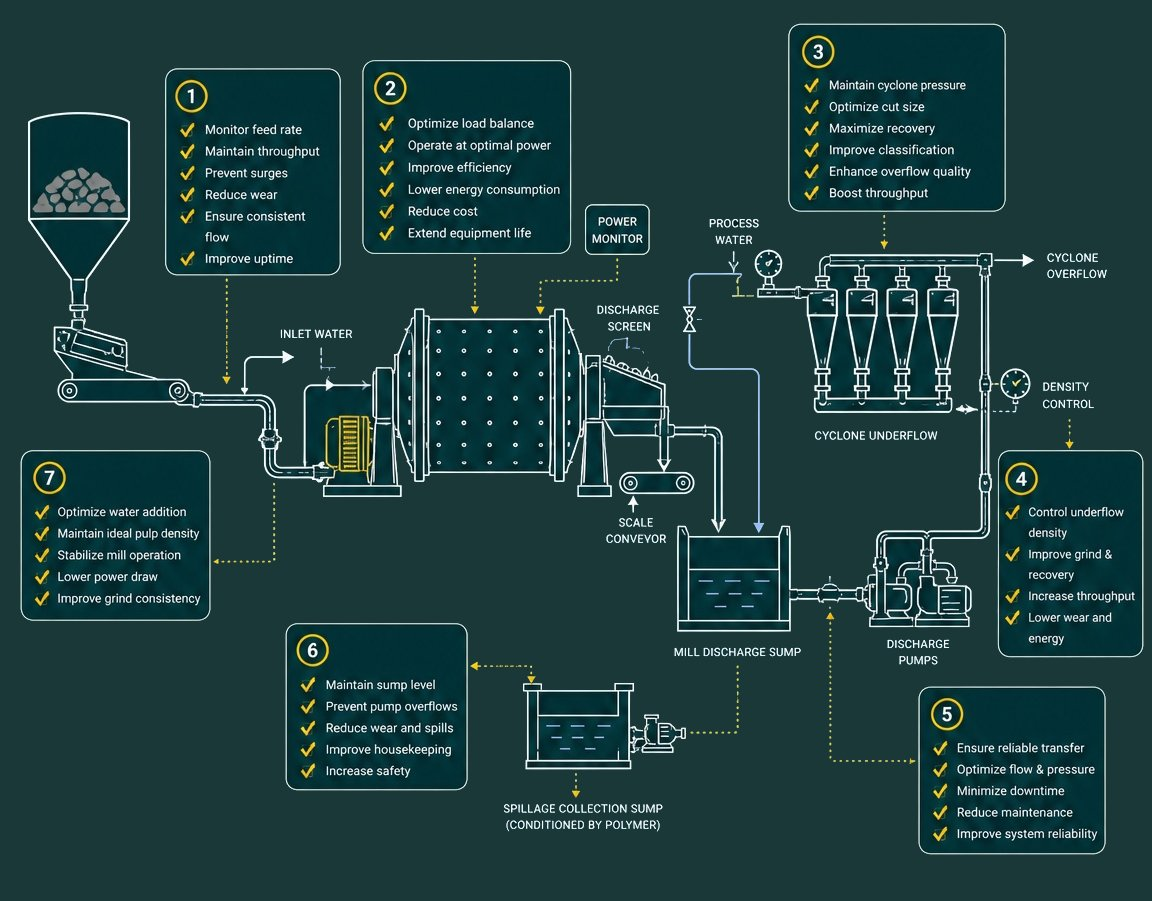
Advanced regulatory control overview showing how the base layer stabilizes the process
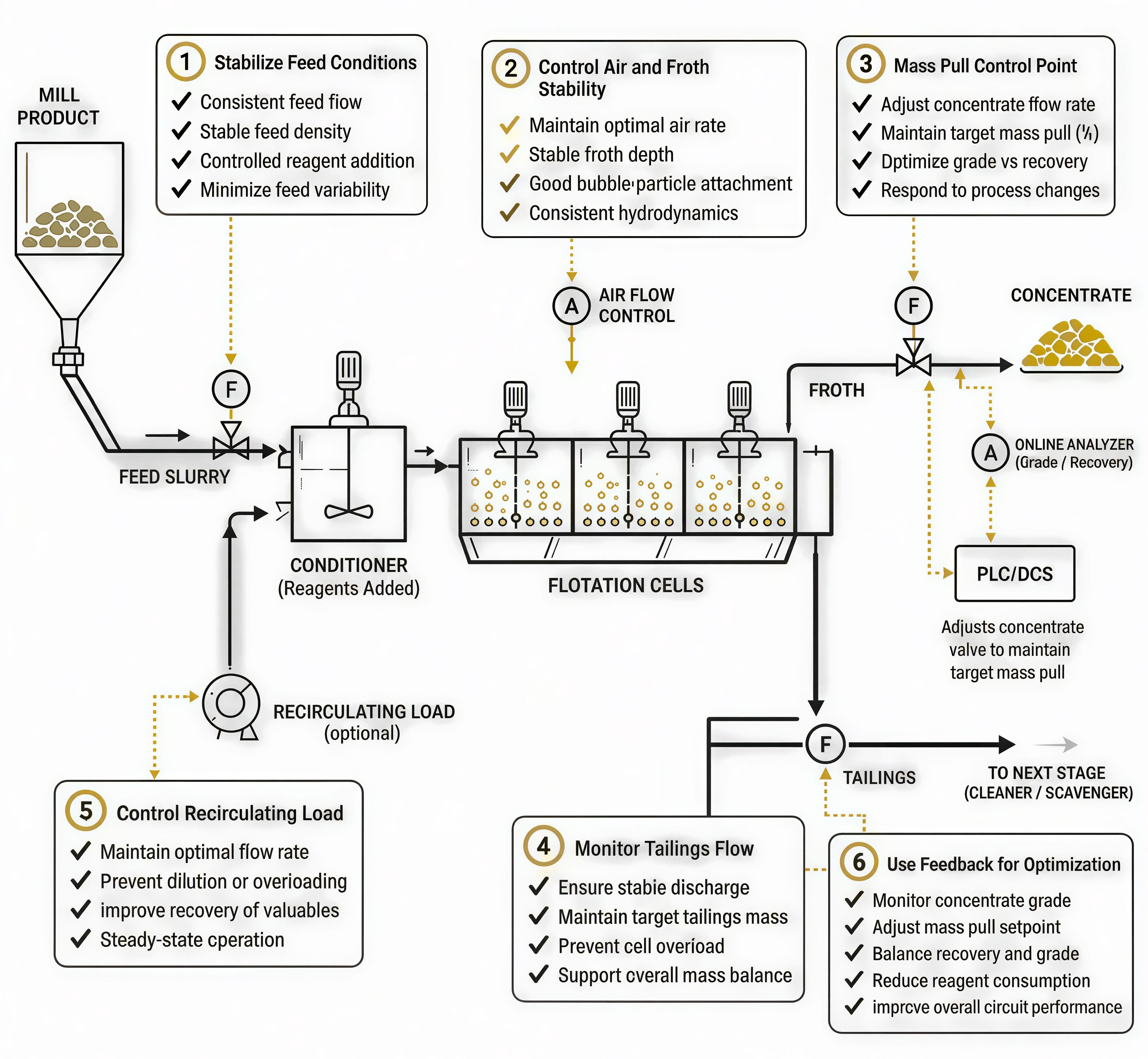
Supervisory control strategy balancing mass and energy across the process

Layer 2: Supervisory Control Layer

Regulate Mass Pull And Energy Balance.

Once base-layer stability is restored, the supervisory layer coordinates setpoints across interacting loops to keep the process inside a balanced operating window. In APC terms, this is where mass pull and energy balance are managed against changing feed conditions, circuit interactions, and operating constraints.

  • Reduces large oscillations that drive instability and recovery loss.
  • Responds dynamically to disturbances before they propagate downstream.
  • Creates a stable bridge between regulatory control and grade optimization.

Layer 3: Optimization Control Layer

Convert Stable Control Into Commercial Gains.

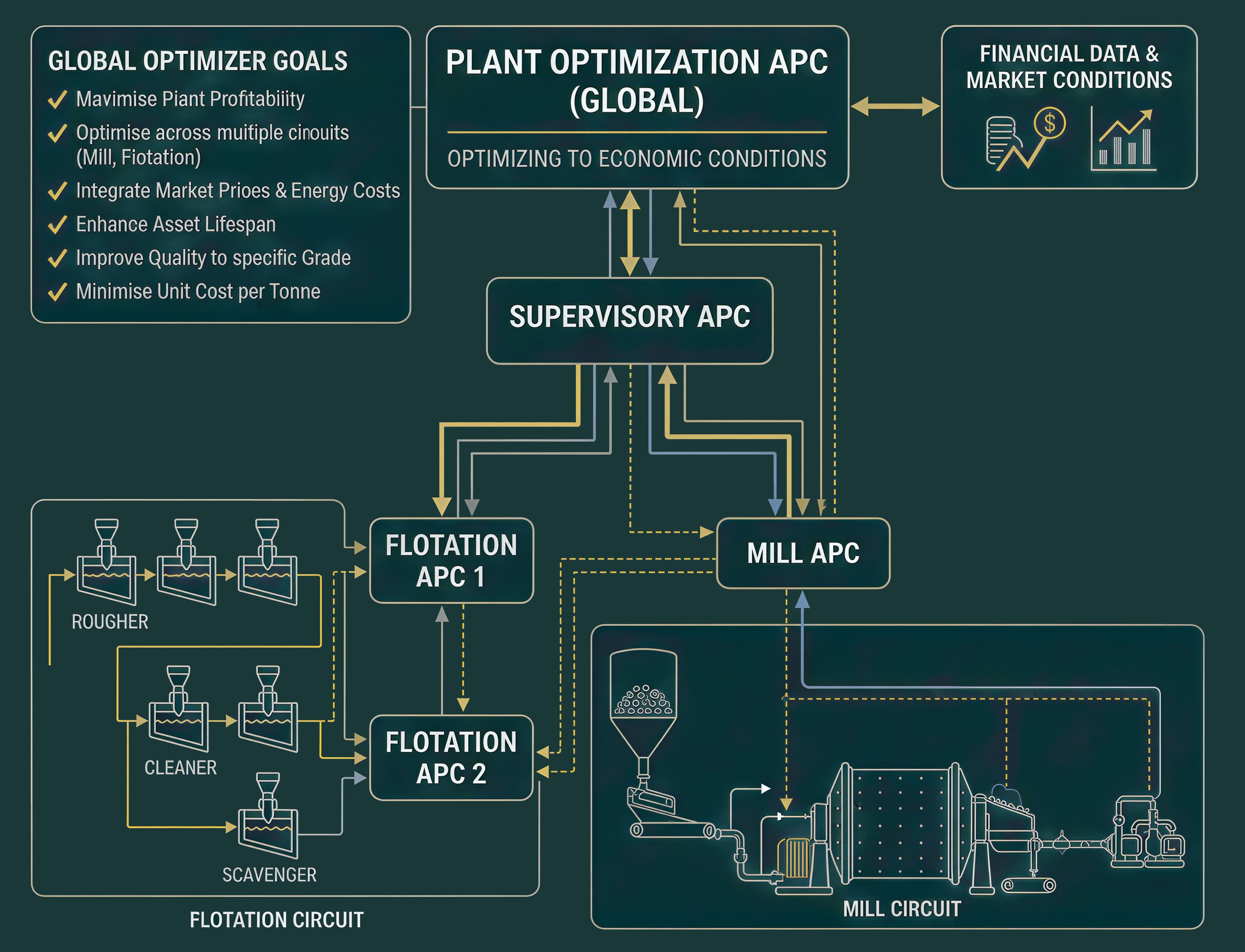
The optimization layer sits above the control stack and drives the plant toward commercial outcomes: recovery, throughput, grade, and cost. Rather than tuning individual loops, it moves the process to the best operating point within the constraints set by the lower layers.

This is where APC becomes visibly valuable: lower variability, stronger recovery, reduced waste, improved OPEX, and more consistent production performance over time.

Optimization APC overview showing business-value outcomes from stable, layered control